

Why Communication Matters in End-of-Life Care
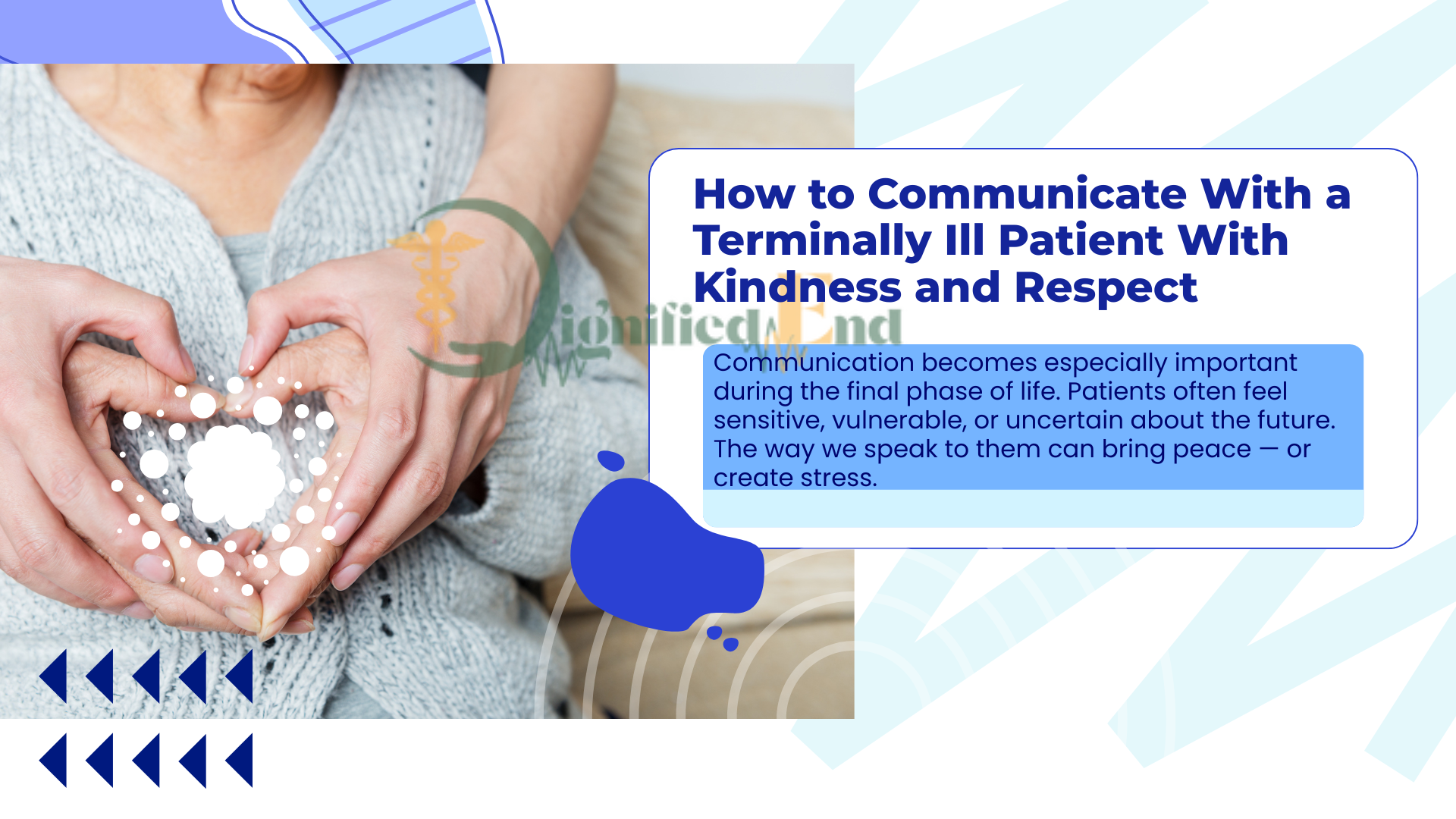
At Dignified end, When a loved one enters the final phase of life, communication becomes one of the most powerful tools a caregiver can offer. Words can calm fear, reduce loneliness, and create meaningful moments during an emotionally vulnerable time. But many families struggle with what to say, how to say it, and how to provide comfort without overwhelming the patient.
This guide explains how to communicate with terminally ill patients respectfully and compassionately, while supporting both emotional and psychological needs.
For additional professional communication guidance, families may refer to:
GetPalliativeCare.org – Communication Resources
1. The Importance of Compassionate Communication
Communication at the end of life is not simply about speaking — it’s about connecting. Patients may feel anxious, unsure, or fearful. Families may feel nervous or afraid of saying the wrong thing.
Compassionate communication helps:
- Reduce anxiety and confusion
- Build emotional trust
- Provide reassurance
- Maintain dignity
- Strengthen family bonds
Even small conversations can bring peace and comfort during difficult moments.
2. Common Emotional Needs of Terminally Ill Patients
Before speaking, it’s important to understand what a patient may be feeling.
They may experience:
- Fear of suffering
- Fear of the unknown
- Sadness about leaving loved ones
- Regret or unresolved emotions
- Gratitude for support
- Desire for peace and comfort
By understanding these emotional needs, caregivers can speak with greater kindness and clarity.
3. How to Speak Gently and Respectfully
Communication should always be calm, slow, and reassuring.
3.1 Use a Soft and Gentle Tone
A peaceful tone helps the patient feel safe. Avoid rushing, raising your voice, or sounding stressed.
3.2 Use Simple, Clear Language
Patients may be tired or confused. Speak in short sentences and avoid complicated explanations.
3.3 Avoid Forcing Conversations
If the patient is too tired to talk, allow quiet comfort instead of pushing them to respond.
4. Supportive Words You Can Use
Not every caregiver knows what to say — but simple, honest, gentle phrases often mean the most.
Examples of comforting phrases:
- “I love you, and I’m here with you.”
- “You’re not alone.”
- “Let me know how I can help you feel comfortable.”
- “I’m right here.”
- “Thank you for everything you’ve taught me.”
- “You’re safe.”
These phrases help reinforce security and emotional connection.
5. What Conversations to Avoid
Certain topics can cause unnecessary stress.
Avoid:
- Arguments
- Complicated medical discussions
- Pressuring the patient to talk
- Financial or family conflicts
- Negative emotional triggers
- Overwhelming news
The goal is to create a peaceful emotional atmosphere.
6. The Power of Listening
Communication is not only about talking — listening is equally powerful.
Patients might want to share:
- Memories
- Hopes
- Fears
- Apologies
- Gratitude
- Spiritual wishes
How to listen effectively:
- Make eye contact
- Nod gently
- Avoid interrupting
- Avoid correcting unless necessary
- Validate their feelings
Listening helps the patient feel heard and respected.
For families seeking guidance on communication and emotional support:
Hospice Foundation of America – Caregiver Education
7. Non-Verbal Communication Matters
For patients who are too weak to speak, non-verbal support is essential.
Non-verbal ways to comfort:
- Holding their hand softly
- Sitting close
- Smiling warmly
- Lightly touching their shoulder
- Being present without speaking
- Playing soft music
Often, presence alone brings comfort when words are difficult.
8. Respecting Boundaries and Preferences
Every patient communicates differently. Some want to talk often. Others prefer silence, music, or simple companionship.
Respect their choices:
- Ask before touching
- Ask before discussing sensitive topics
- Let them choose who visits
- Honor spiritual or cultural preferences
Respect reinforces dignity and autonomy.
9. Helping Patients Express Their Wishes
Some patients will want to share personal thoughts or requests.
Common wishes:
- Spiritual rituals
- Special visitors
- Peaceful music
- Privacy
- Specific comfort items
Allowing patients to express their wishes helps them feel a sense of control.
10. Communicating With a Patient Who Is Confused or Disoriented
Confusion can occur due to medication, illness progression, or exhaustion.
How to help:
- Speak slowly
- Keep sentences short
- Repeat information gently
- Avoid loud noises
- Offer reassurance frequently
- Keep familiar items nearby
Confusion can be frightening — reassurance brings comfort.
11. Involving Professional Support
Palliative-care specialists are trained to guide families through emotional communication challenges.
Safe and reputable resource:
Cleveland Clinic – Palliative Care Communication
(General palliative-care guidance, not euthanasia-related.)
12. Caring for Yourself as a Communicating Caregiver
Speaking with a terminally ill loved one can be emotionally draining.
Caregiver self-care:
- Take breaks
- Eat regularly
- Rest when possible
- Seek emotional support
- Join a caregiver group
A healthy caregiver provides better emotional support.
Conclusion
Communication is one of the most meaningful gifts you can offer during end-of-life care. Whether through kind words, gentle presence, or simply listening, your support can bring peace, comfort, and dignity during a vulnerable time.
FAQ
1. What should you say to a terminally ill patient?
Use gentle, comforting phrases like “I’m here with you,” “You’re not alone,” or “Let me know what you need.”
2. How do you communicate when a patient is too weak to talk?
Use non-verbal cues such as holding hands, eye contact, soft music, or simply sitting quietly near them.
3. What topics should you avoid with terminal patients?
Avoid arguments, stressful subjects, medical complexity, and anything that increases fear or emotional burden.
4. Why is listening important in end-of-life communication?
Listening helps the patient feel valued, heard, and emotionally supported during an uncertain time.
5. How do you comfort a confused or disoriented patient?
Speak slowly, repeat information gently, reduce noise, and offer reassurance frequently.

